Category Archives for "Urban Transit"

Jun 22

Challenges with State of Good Repair at TTC – Rick Leary reports

By Transport Action Ontario | Latest News , Urban Transit

In what was likely his last interview before his surprise resignation 2 days later, Toronto Transit Commission (TTC) CEO Rick Leary was interviewed on June 18 at TRACCS  (Transit Rail Association for Canadian Contractors, Maintainers, Operators and Standards)  Rail Day 2024.  He focused mostly on State of Good Repair (SOGR) and gave a very sobering summary of SOGR at the TTC.

The TTC 15-year capital plan now stands at about $38B, only one-third of which is funded.  This leads to continual deferral of necessary SOGR items.  Leary noted that the derailment of the Scarborough RT in 2023 was due to the rolling stock being 13-years beyond lifetime, and noted that “airlines don’t brag about having the oldest fleet in the country”.

Top priority SOGR items include:

  • Money from the federal government to match provincial and municipal funds for new subway cars on Line 2.  The federal permanent Public Transit Fund starts in 2026 and TTC is hoping to get preauthorization this summer for the federal funds, so that procurement can start
  • Maintenance/upgrades of track, power, tunnels and signals on Line 2
  • Streetcar maintenance
  • Bus fleet maintenance/electrification

Leary indicated that various academic studies have shown that every dollar invested into transit yields seven dollars in economic uplift, not including health benefits and opportunity for affordable housing.

Jun 07

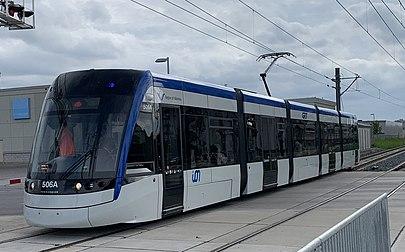
Waterloo ION LRT Marks 5 Successful Years

By Transport Action Ontario | Latest News , Urban Transit

The Waterloo ION LRT is Ontario’s first modern urban LRT line, and has just marked 5 years of successful operation.  At our recent Annual General Meeting, Transport Action Ontario members and supporters were given an update from Doug Spooner, Acting Commissioner, Transportation Services, Region of Waterloo. The following is from Doug’s talk plus a review of historical ION files.

Waterloo Regional Council approved the Phase 1 ION LRT project, from Conestoga Mall to Fairview Mall (19 km) in 2011.  A 30-year DBFOM procurement model was selected.  In March, 2014, a consortium called GrandLinq, with members Plenary, Meridian, Aecom, Kiewit and Keolis was selected as the winning bidder. Council also approved an interim BRT service from Fairview to Cambridge (Galt).

A staff report from March 4, 2014 provided a uniquely transparent amount of detail on the final costs and structure of the GrandLinq project agreement.  Capital costs for the Design-Build portion were $532M (independent of inflation), with the consortium paying $131M of initial capital costs, to be repaid later.  This total does not include non-DBFOM items like vehicles, land, project office, some early works and interim BRT.  The total capital costs of the project was $818M.

The 30-year financing, operating, maintenance and lifecycle costs were $901M, to be adjusted for inflation, actual service levels, deductions for non-performance. 

The report cited a savings of $400M -500M in avoided road widenings through mature neighbourhoods, and the improved quality of life in much of the community.

Funding sources for the project were $300M from the province and $265M from the federal government, with the balance to be sourced from the Region.

The Phase I project has proven a great success. The asset is owned by the Region which sets schedules and collects fares.  Keolis is the operator.   The right-of-way is a mix of dedicated transit lanes and separated rail corridor.  The service runs a 10-minute headway in peak times and 15-minute off-peak, with full transit signal priority. With fare and service integration with the balance of Grand River Transit, ridership is up and growing.  The LRT stations were designed for coupled cars, so adding capacity is straightforward.  Over $3 Billion of development has occurred along the corridor. 

Business Case development has commenced on the Phase 2 LRT project from Fairview to Cambridge (Galt).  Three terminus sites in Galt are being compared, with capital costs, including cost escalation to 2033 and contingency, ranging from $2.9B – $4.5B.  The Business Case is also looking at technology options (eg BRT in lieu of LRT) and level of priority (exclusive lanes vs. mixed traffic).

The Region has acknowledged the much higher unit cost for Phase 2, citing reasons including a need for 6 bridges (versus zero in Phase 1), grade separations and general construction cost escalation in the past 10 years.

The Region is also partnering with Metrolinx on a new $130M multimodal transit hub in Kitchener, connecting VIA Rail. GO Transit, ION, Grand River Transit and local trail systems in one location.

May 29

Advocacy Summary April, 2023 – May, 2024

By Transport Action Ontario | Highways and Bridges , Intercity Rail and Bus , Latest News , Northern Ontario , Southwestern Ontario , Urban Transit

Transport Action Ontario’s annual general meeting (AGM) was held in Toronto on May 25, 2024 in a hybrid format. The meeting followed a pro-forma agenda, including Treasurer’s report and election of officers and directors for the upcoming year.

The major part of the meeting was devoted to the President’s Report, which summarized the extensive advocacy work undertaken by the organization all across the Province over the past 12 months. In total, work was conducted on about 30 items, with some successes and good progress on others.

For members and subscribers who were unable to attend the AGM, the President’s Report is attached as a FYI.

Apr 30

GO Train Service Improvements start April 28

By Transport Action Ontario | Urban Transit

Ontario continues to unlock the power of the GO train network.

On Sunday April 28, 2024, GO Transit’s new summer schedule began with a large service increase. The service increases were announced by the Premier and his transportation minister at the beginning of April, after being ‘leaked’ a few months ago in a Metrolinx update email. Metrolinx claims that this is the largest single service expansion in GO Transit’s history, but that fact has yet to be independently verified.

Lakeshore Line

The increase includes the return of 15-minute service on the Lakeshore Line between Oshawa and Oakville during weekend afternoons and evenings. Expansion of 15 minute service beyond Oakville is desperately needed, but will have to be held off until the Burloak Drive grade separation is completed. Metrolinx has yet to state that this will be the case, so public pressure will likely be needed.

Kitchener Line

The first 30-minute midday weekday service on the Kitchener line has also begun. The service operates only between Bramalea and Union. Unfortunately, at many times the schedule is not quite 30 minutes, and gaps still exist in off-peak directions. Riders beyond Bramalea continue to be left in the dark as to when they will see even weekend service to Kitchener, even following many months of increased pressure from area MPs, MPPs, and mayors to release even so much as a timeline for improved service.

Stouffville Line

The Stouffville line is seeing a return to train service beyond 7pm on weekdays, a hopefully permanent change that will contribute to the transformation of GO Transit from a commuter rail system to a regional rail system.

Milton Line

Unfortunately, even after deadheading a GO train all the way to Milton for the announcement, Milton riders were only gifted one additional weekday round-trip. Premier Ford stated in response to a question that the announcement location was “absolutely not” motivated by the by-election currently underway in Milton.

UP Express (UPX) stumble

The schedule changes didn’t come without some havoc. In a bid to address crowding, and to reinforce the UP Express as a premium service only for airport-downtown passengers, the changes originally proposed the removal of stops at Weston and Bloor stations for every second UPX train. The proposal sparked enormous immediate public uproar from UPX riders who have been grateful for the accidental rapid transit success the train has become by being a fast link to downtown.

In a rare move, transportation minister Prabmeet Sarkaria himself ordered the reversal of the change. Such a change should have been seen as obviously unpopular from the beginning, and is just another example of how Metrolinx can be out of touch with its passengers. The quick reversal is a positive move showing the increased focus the government is paying to transit and transit riders, however some have speculated that the change might have been spurred by the Premier’s nephew and area MPP Michael Ford, whose constituency office happens to be right across from Weston GO. Perhaps MPP Ford’s office should be be moved to Kitchener!

More to come

Overall, these are welcome, if not a little rough, changes that are just the beginning of what is to come. As we wait for the completion of the co-development phase of the GO Expansion project with ONExpress, we wish that Metrolinx were more forthcoming with their changes and future plans so that riders are treated with respect and the public can continue to reliably plan their lives around the GTHA’s future sustainable and frequent regional rail.

Presto card readers. (Photograph by Wylie Poon via Flickr)
Feb 10

Fare Integration in Greater Toronto takes Giant Step Forward

By Transport Action Ontario | Latest News , Urban Transit

After years of campaigning, analysis and u-turns (see our post of August 27, 2019), public transit in Greater Toronto will take a giant step forward on February 26, 2024 when Ontario launches its “One Fare” program.

Transit riders will only pay once when connecting between the TTC, GO Transit and 4 regional transit systems – Brampton Transit, Durham Region Transit, MiWay, and York Region Transit. There is already a zero co-fare policy between GO Transit and other transit agencies in the 905, like Hamilton or Burlington, as well as a zero co-fare policy between individual 905 agencies. Therefore this means that the one fare program applies across the entire Greater Toronto and Hamilton Area. For example:

  • Trip starts on TTC, transfers to GO, then transfers back to TTC or 905 agency. Pay only the GO fare. Transfer valid within 3 hours of start of GO trip
  • Trip starts on YRT, transfers to TTC. Pay only the YRT fare. Transfers valid for 2 hours from start of YRT trip.

Passengers using credit or debit cards, including cards stored in digital wallets, will need to ensure they tap the same card for each segment of their journey to receive the co-fare discount.

This advance will remove major inequities such as at York University, where students from the 905 using local transit or GO buses were required to pay an additional TTC fare to travel 1 or 2 subway stops, or walk up to 15 minutes.

The program is expected to attract an additional 8 million riders per year, with an expected program cost is $90 million/year. This will be funded by Ontario and local systems will be reimbursed for foregone fare revenue.

The previous co-fare policy was introduced in 2018, providing a $1.50 discount on GO-TTC transfers, but this was ended in March 2020 because funding was not renewed by the provincial government.

Photo of Presto Card readers by Wylie Poon via Flickr

1 3 4 5 6 7 28